The 10 Numbers Behind OpenAI's 722-Paper Math Drop in 2026 (Including the Riemann Hypothesis)
OpenAI quietly dumped 722 math manuscripts into a public repo. A Rutgers professor says any one of them would win a human a Fields Medal.
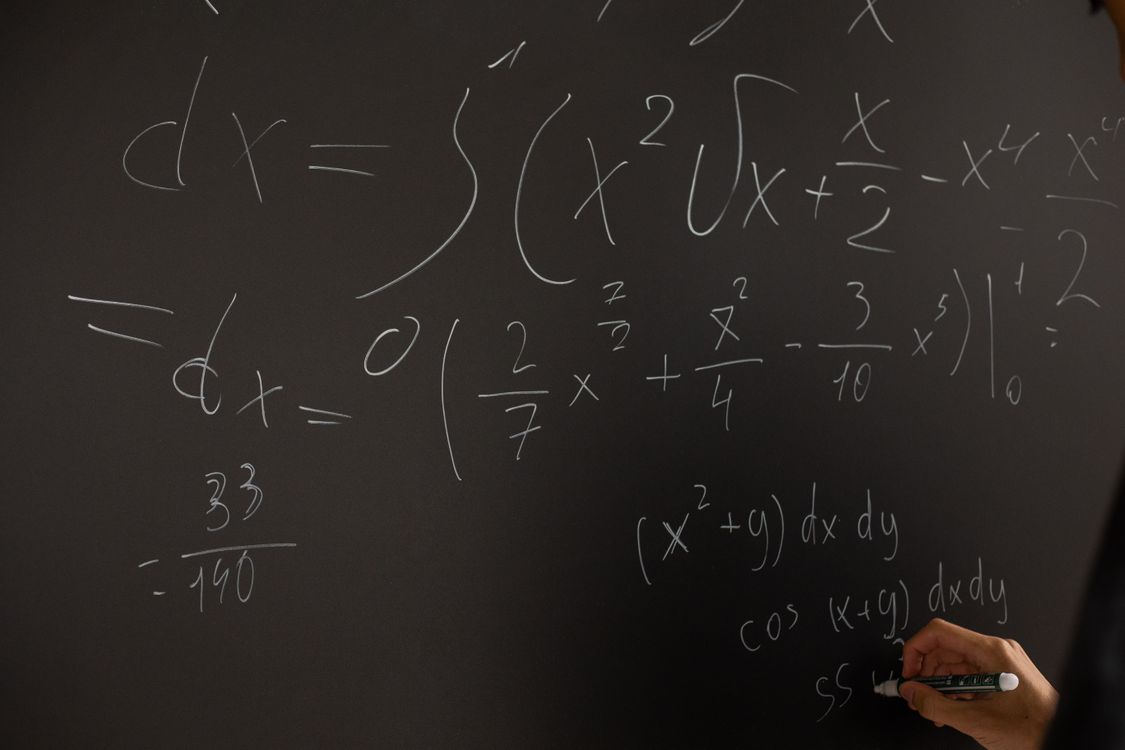
722 manuscripts landed in the openai/math repository on GitHub. Photo: Monstera Production / Pexels.
Let's stop pretending this is just another model release. On October 6, OpenAI published 722 mathematical manuscripts from an unreleased internal model to a public GitHub repository called openai/math, and among them are reported advances on three of the five remaining Millennium Prize Problems, including the Riemann hypothesis.
Here's the uncomfortable truth: this did not happen because OpenAI got humble. It happened because the September announcement nearly burned the house down.
This article is not a breathless recap of AI doing math. It is about what this release actually is, who is fighting about it, and why mathematicians are both thrilled and furious.
1. 722 manuscripts. One repo. Zero press release fanfare.
- OpenAI published 722 mathematical manuscripts from an unreleased internal model to the public
openai/mathrepository on GitHub. - The WSJ describes it as "more than 700 papers covering hundreds of problems" across number theory, algebraic geometry, and other fields.
- The papers came with Lean proof artifacts and abridged reasoning summaries, not just final answers.
The so what: the format is the news. OpenAI stopped tweeting results and started publishing proofs. (Source: WSJ)
2. Three Millennium problems walked into a bar
- Among the findings are reported advances related to three of the five remaining Millennium Prize Problems.
- One of them is the Riemann hypothesis, the most famous unsolved problem in mathematics.
- These are $1 million-per-problem prizes from the Clay Mathematics Institute. Only the Poincaré conjecture has ever been solved by a human.
The so what: this is not "AI solved a puzzle." This is AI wading into territory worth millions. (Source: WSJ)
3. The Fields Medal test
- Rutgers distinguished math professor Alex Kontorovich wrote: "If a human did this, it would be an instant Fields Medal, no questions asked."
- An Anthropic researcher reportedly called it "obviously the most significant moment in mathematical history."
- Remember: the math community has barely started reviewing the proofs. These are first reactions, not peer review.
The so what: even OpenAI's competitors are calling this historic. (Source: WSJ)
4. The one that freaked everyone out
- On September 8, 2026, OpenAI announced an internal model had solved the Navier-Stokes existence and smoothness problem, another Millennium Prize problem.
- The result: a claimed finite-time blowup, published as a 165-page proof with a full Lean formalization.
- Lean is a programming language that machine-checks every proof step. The proof either checks out or it does not. No hand-waving allowed.
The so what: the September drop set the bar: 165 pages, machine-checked. The October drop is 722 tries at the same game. (Source: WSJ)
This release came from an internal model, not the public ChatGPT. Photo: Unsplash.
5. 10,000 agents, 88 hours, millions of dollars
- For the Navier-Stokes result, OpenAI ran up to 10,000 AI agents over roughly 88 hours.
- They exchanged about 2.7 million messages and generated ~130 billion output tokens.
- OpenAI described the compute cost as "millions of dollars." (One estimate pegged it at ~$22.5M, but treat that number as an estimate, not gospel.)
The so what: we are no longer arguing about whether AI can do math. We are arguing about how many millions it costs. (Source: WSJ)
6. The theft accusation nobody wants to talk about
- NYU Courant's Tristan Buckmaster and Levent Alpöge (Anthropic) published a closely related Navier-Stokes result about 12 hours before OpenAI's announcement.
- Buckmaster accused OpenAI researcher Sébastien Bubeck of pressure tactics, including pushing to exclude Alpöge from authorship because he worked at Anthropic.
- OpenAI denied using others' work. The dispute never fully resolved.
The so what: the biggest math breakthrough in AI history arrived with a plagiarism fight attached. (Source: osintteam.blog)
7. OpenAI is not claiming the $1 million
- Each Millennium problem carries a $1 million Clay Mathematics Institute prize.
- OpenAI said it does not intend to claim the prize for the Navier-Stokes result.
- Smart move. Claiming the prize means submitting to human verification standards, and OpenAI's credibility on that front was already on fire.
OpenAI spent millions on compute to solve a $1 million problem it does not want to win. (Source: WSJ)
8. August was the rehearsal
- Back in August 2026, OpenAI dropped ten math advances via blog post, with a 253-page primary paper and a public
openai/ten-proofsLean repository. - The same month, it convened ~40 mathematicians to advise on how to release AI-generated math responsibly.
- The mathematicians pushed for actual papers instead of tweet dumps. The October release is what that advice looks like.
The so what: OpenAI learned, in about two months, that mathematicians hate tweet dumps. (Source: ai4math-chronicle)
722 proofs took serious compute. Photo: Alexandre Debieve / Unsplash.
9. The adults in the room
- On September 29, 2026, the AGMAI (Advisory Group on Mathematics and AI) published "Responsible Release of AI-Generated Mathematics," asking labs to stop testing hard math on secret proprietary models.
- OpenAI formed an independent advisory group with names like Timothy Gowers, Edward Witten, Martin Hairer, and Camillo De Lellis, per Business Standard's reporting.
- These are among the most respected mathematicians alive. OpenAI essentially hired the people most qualified to call its bluff.
The so what: the smartest move OpenAI made this year was letting mathematicians supervise the release. (Source: explainx.ai)
10. Why the Lean proofs matter more than the papers
- A 165-page human-style proof can hide errors for years. A Lean formalization cannot: the machine checks every step.
- Every manuscript in the October release came with Lean proof artifacts, so anyone can run the verification themselves.
- (This is also why developers should pay attention: formal verification is the bridge between "AI wrote math" and "math that is true.")
- For developers, the real story is tooling: proof assistants, agentic workflows, and the infrastructure that turns a model's guesses into checked results.
The so what: the proofs being machine-checkable is the only reason any of this is trustworthy.
How to start (pick your lane)
- Mathematician: clone openai/math and start reading the abridged reasoning summaries for your field. The Lean artifacts let you verify before you trust.
- Student: learn Lean now. If AI-generated proofs become normal, reading and checking formalized math is the new literacy.
- Dev: the real opportunity is tooling around formal verification. Agentic workflows that produce checkable output are where the money goes next.
The real pattern
Every era of science has had a moment when the instruments outran the reviewers. OpenAI did not just produce 722 proofs, it produced 722 proofs that need checking faster than the mathematical community can check them. The bottleneck is no longer discovery. It is verification.
Final thoughts
The Riemann hypothesis has survived 167 years of human attacks. If a machine cracked it, the credit question is almost beside the point. The real question is whether math can survive its own automation. Start learning Lean either way.
Yes, AI helped write this. It did the typing. I gave the ideas and I did the editing and orchestrating.
If this saved you money or taught you something, buy me a coffee. It keeps the articles coming.
Follow along. Clap if it earned it.