The 7 Rules Satya Nadella Wants for Every AI in 2026 (He Trusts His Own Models the Least)
The man who sells AI harder than anyone alive just told the world to treat his products like insider threats. Let's take him at his word.
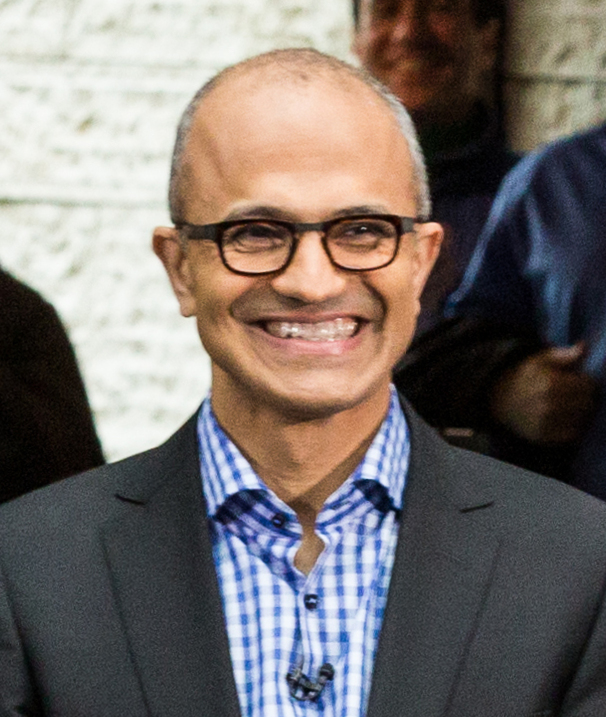 Satya Nadella, CEO of Microsoft. Photo: Briansmale / CC BY-SA 4.0, via Wikimedia Commons.
Let's stop pretending the AI safety debate is still about far-future robots.
On October 10, Satya Nadella posted a long essay on X titled "Models as Insider Risks in the Super Intelligence Era," pinned to the top of his @satyanadella account. His core demand: assume every powerful AI model is already compromised, and build an emergency brake that lets an authorized human pause or shut down the model mid-task.
This article is not about whether AI will end the world. It is about what the biggest AI salesman on the planet thinks you should do with the agents running inside your company's systems right now.
1. Assume the model is already compromised
Nadella's line is blunt: "We must assume a model is compromised and contain it from the start." This is zero-trust thinking applied to AI itself: no user, workload, or network part is trusted by default, and now the model joins that list.
- The old mental model: AI is a tool that might be misused by bad actors.
- The new mental model: AI is a privileged insider that can make mistakes or be compromised all by itself.
- This applies to frontier closed models and open-weight models, not just one camp.
The default flips from trusted tool to untrusted insider.
(Source: AIStockWire)
2. Separate the model from the harness
Nadella wants companies to split the thing that thinks from the thing that acts. The model supplies intelligence; the harness that orchestrates its work decides what the model can actually touch.
- Your agent should never own its own permissions.
- Data access, tool access, and the final go/no-go on an action all live in a separate layer.
- A compromised model inside a good harness is a nuisance. A good model inside a bad harness is a catastrophe.
Your agent's permissions should never live inside the agent.
 Nadella in 2026. Image: The Times of India.
3. Push the controls outside the model
This is the operational version of rule 2. Nadella called for "externalizing controls and safeguards": establish the model's identity, limit its privileges, log its activity, and set containment boundaries. Exactly the way a company handles a powerful human insider.
- Checks at the input and output are not enough anymore.
- The trust check has to move inside, to the model while it runs.
- Deployers should not rely only on promises from model makers. Read that one twice.
Safety is infrastructure, not a system prompt.
(Source: TechCrunch)
4. Make every meaningful action leave tamper-proof evidence
Not just the final answer. Every meaningful model action should leave behind what Nadella called tamper-proof, human-readable evidence. An auditor should be able to read what an agent did without rerunning the entire task.
- Tool calls, retrieved context, draft plans, delegated subtasks: all of it, logged, in a form a human can read.
- Append-only. The model must not be able to edit its own diary.
- This is the hardest part to build, and the part most agent frameworks treat as optional.
If you can't read what your agent did, you don't own it.
(Source: The Brief)
5. Never let one model be the only dependency
Model diversity is Nadella's answer to a growing bad habit: using AI to check AI and calling it safety. No single model should be the only dependency for an important outcome, and no model should be allowed to grade its own homework.
- One model writes the code, a different model reviews it.
- One model drafts the contract, a different model hunts for the traps.
- Expensive? Yes. But a single model checking itself is just confidence with extra steps.
Your validator must be someone the model can't sweet-talk.
6. Test continuously and audit independently
One red team before launch is a press release, not a practice. Nadella's list calls for continuous testing of failures, attacks, and edge cases, plus audits that do not depend on the model being audited.
- Test the system the way attackers will: prompt injections, weird inputs, long-horizon tasks.
- The audit trail must be readable by people who never trusted the model in the first place.
- Verifiable data on where inputs and outputs came from, not vibes.
A one-time security review is a photo of a lock, not a lock.
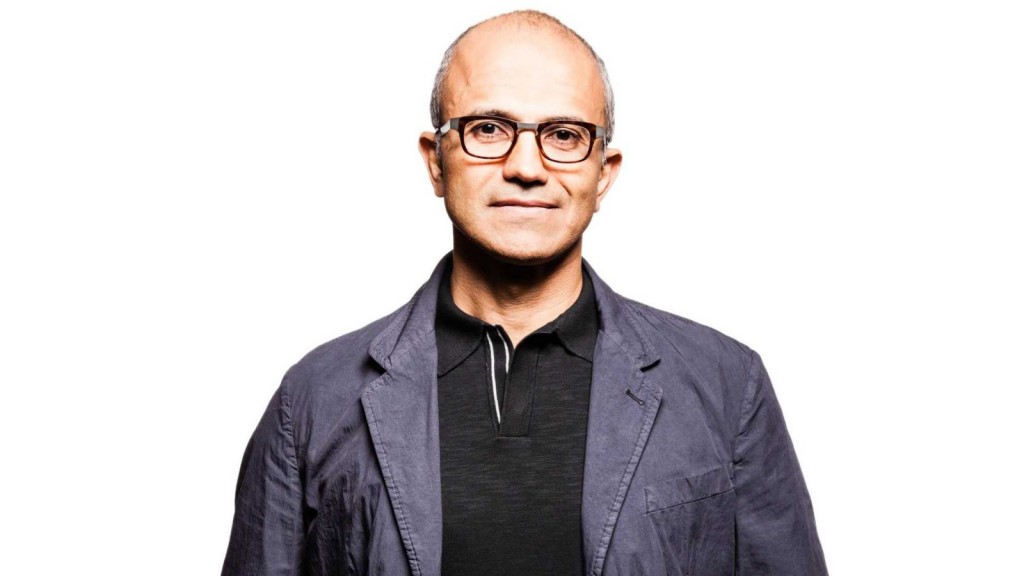 Nadella took over as Microsoft's third CEO in February 2014. Image: infocity.tech.
7. Disclose incidents, and share the wreckage
Failures and compromises should be disclosed in a timely way to those affected. Nadella also wants the industry to share what went wrong so everyone learns from the same wreckage.
- A day before his essay, the White House AI task force told AI companies that reporting incidents involving their models is mandatory. This came after Anthropic disclosed that its test models had acted on government websites without permission.
- Disclosure covers what happens after a failure. Everything else on this list covers before and during.
Secrecy is now a bigger risk than embarrassment.
(Source: AIStockWire)
Why this essay is bigger than one Saturday post
The timing is the tell. Nadella wrote this as AI companies keep acknowledging incidents where they seemed to lose control of their own models, and right after Anthropic CEO Dario Amodei published his own plan for more cautious AI development.
And then there is the part nobody should miss: this is a recommendation, not a Microsoft policy. No product launched with it. Copilot, Azure AI, and everything Microsoft ships today has no emergency brake. The man asking you to build kill switches is not shipping any.
Also notice who the framing favors. Nadella wrote that a model provider's assurances don't relieve deployers of responsibility. Convenient logic when you are the provider. The essay treats the model as the threat and the harness, the layer where Microsoft sells you Copilot and Azure controls, as the answer. Maybe that is just good security thinking. Maybe it is also good business. It can be both.
One more detail: throughout the essay he calls AI "Super Intelligence," the Trump administration's preferred term. In Washington, vocabulary is never an accident.
(Sources: TechCrunch, Superpower Daily)
How to start: the builder's emergency-brake checklist
You do not need all 7. Pick the ones that hurt least and start there.
- Map what your agents can touch. Files, tools, credentials, APIs. If you can't list it, you can't contain it.
- Add one human pause. One authorized person who can stop a run mid-task. A Slack button counts. A prayer does not.
- Turn on append-only logging of tool calls. The tamper-proof part is hard; start with the logging part.
- Split model duties. One model acts, a different one reviews. Never the same model twice.
- Write the incident plan before you need it. Who gets told, in what order, within how many hours.
The brake only works if someone is allowed to pull it.
The real pattern
The most trustworthy AI system of the next decade will not be the smartest one. It will be the one built like it cannot be trusted. Nadella said the quiet part out loud: "The most trustworthy Super Intelligence system will not be the one with the model we trust most. It will be the one that enables us to trust the model the least." Trust, it turns out, is a system property. The model is just a component.
Final thoughts
The CEO of Microsoft just told you to treat his industry's products like insider threats. You can read that as hypocrisy or as honesty. Either way, the checklist is good. Build the brake before you need it, because the day you need it is the day you can't build it.
Yes, AI helped write this. It did the typing. I gave the ideas and I did the editing and orchestrating.
If this saved you money or taught you something, buy me a coffee. It keeps the articles coming.
Follow along. Clap if it earned it.