The 7 Things DeepSeek's Tiny V4.1-Flash Proves in 2026 (Welcome to Wish-Driven Coding)
A small, cheap Chinese model just beat OpenAI and Anthropic flagships at coding. The leaderboard is lying to you about what matters.
 The DeepSeek logo. Behind it sits the cheapest frontier-class coding model on the planet right now. Logo via Wikimedia Commons, uploaded by RoadMaster19 (CC BY 4.0)
Let's stop pretending bigger models win. DeepSeek just shipped a Flash-class model that beats GPT-5.5 Sol and Opus 5.0 on coding benchmarks, at a fraction of their compute and cost.
Here's the uncomfortable truth: the benchmark game rewards the model that answers best. The deployment game rewards the model that answers cheapest. DeepSeek just won both at once.
This article is not another model-release post. It is about what "wish-driven coding" means for everyone who writes code for a living.
1. A tiny model just smoked the flagships
The numbers are almost rude. A lightweight model, built to be cheap, outperforming the most expensive models on Earth.
- DeepSWE 1.1: 77 percent for DeepSeek-V4.1-Flash-1017, against 74 percent for Opus 5.0
- AutomationBench: 60.5 percent, against 50.3 percent for Opus 5.0
- Apex Bench: 72.1 percent, against 65.8 percent
- It also outscores GPT-5.5 Sol, OpenAI's workhorse, plus GLM-5.3 and Kimi K3
The flagship era assumed you had to choose: smart or cheap. That assumption just broke.
(Source: wccftech.com)
2. "Wish-driven coding" is not marketing fluff
DeepSeek's post-training lead, Wu Yu, announced the model with one line: "Entering the era of democratized wish-driven coding." That is a strange phrase. It is also exactly right.
- You state the wish: what the software should do
- The model builds it, tests it, fixes it, and tries again
- The human's job moves from writing code to describing outcomes
(Vibe coding was the joke version of this. Wish-driven coding is the version where the model is good enough that the joke stops being funny.)
When wishing becomes compiling, the scarcest skill is knowing what to wish for.
(Source: wccftech.com)
3. The secret is not more compute. It is less memory
DeepSeek did not win by throwing GPUs at the problem. It won by being obsessive about memory, the same lesson Microsoft just learned with Maia 300.
- The model keeps its core architecture: CED, CSA2, FP4 quantization, SWA bounded replay
- Its KV cache is just 890 bytes per token, absurdly small
- Smaller memory footprint means more sessions per GPU, which means lower cost per user
Every efficiency breakthrough in AI right now is a memory breakthrough wearing a costume.
(Source: wccftech.com)
4. DeepSeek trained the model to stop talking and start typing
This is my favorite detail. DeepSeek specifically trained V4.1-Flash-1017 to stop being wordy. No paragraphs of explanation. No throat-clearing. Just the code.
- Reinforcement learning penalized rambling and rewarded the shortest correct path
- Shorter outputs mean fewer tokens, which directly means faster and cheaper
- DeepSeek calls it "extreme output condensation," which is a fancy way of saying shut up and ship
Tokens are money. Every word the model does not say is margin you keep.
(Source: wccftech.com)
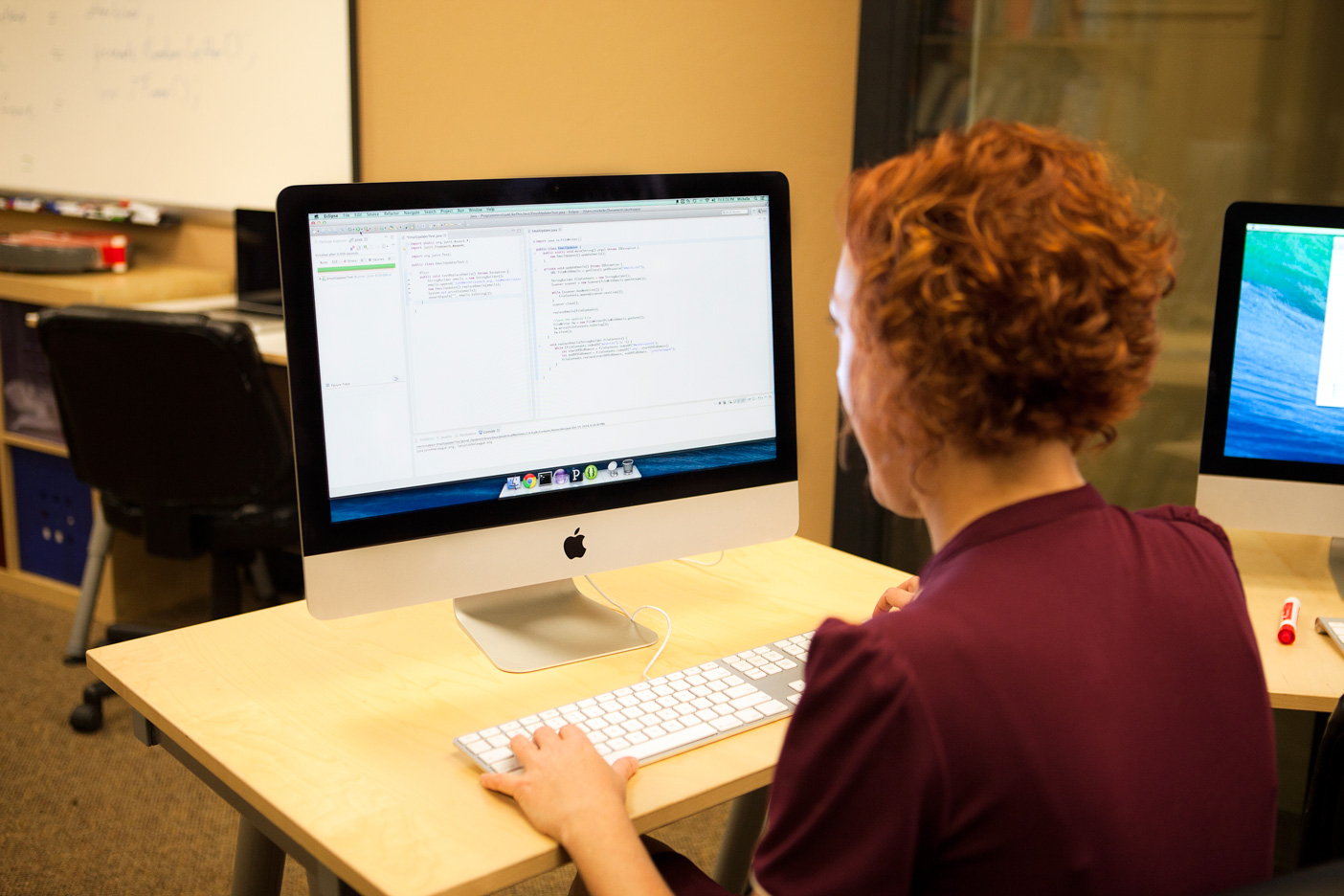 A programmer writing code with unit tests. The test-fix loop is exactly what DeepSeek hardwired its model for. Photo: Joonspoon via Wikimedia Commons (CC BY-SA 4.0)
5. It was built for the loop, not the chat box
Most models are optimized for a human typing in a chat window. This one was optimized for an agent running in a loop: write code, run tests, fail, fix, try again.
- Hardwired for agentic coding environments, including DeepSeek's own harness
- Optimized for tools like Tencent CodeBuddy
- In a test-fail-fix loop, it performs significantly better than its predecessor
The chat box was the demo. The loop is the product.
(Source: wccftech.com)
6. This is a Pareto improvement, and that word matters
DeepSeek's announcement used a specific phrase: "a Pareto improvement in performance and cost." Stronger benchmarks, faster task completion, shorter outputs than the previous version. Better and cheaper at the same time.
- Usually you trade quality for cost. Here both moved the right way
- The model is live on DeepSeek's website, app, and API right now
- Every indie hacker running coding agents just got a cheaper, better engine overnight
The cost floor of good coding AI is collapsing, and it is collapsing from the cheap end upward.
(Source: wccftech.com)
 Wish-driven coding: you describe the outcome, the model does the typing. Photo: Tsinkala via Wikimedia Commons (CC BY-SA 4.0)
7. The uncomfortable part for everyone else
If a cheap model beats your flagship at coding, your pricing has a problem. OpenAI and Anthropic charge premium prices for premium models. DeepSeek just redefined what "premium" costs to produce.
- Expect pricing pressure on coding APIs across the board
- Expect the next round of benchmarks to quietly move the goalposts
- The winners are not the labs. They are the indie developers who can now afford frontier-class coding at Flash-class prices
Democratized does not mean everyone gets the same model. It means the good model stops being a luxury good.
(Source: wccftech.com)
How to start
You do not need permission to ride this wave. The model is live on DeepSeek's site, app, and API today.
- Developers: point your coding agent at the cheapest capable model first, not the flagship. Benchmark on your own tasks
- Indie hackers: recompute your unit economics. If your AI feature was too expensive to ship last month, rerun the math
- Team leads: the "which model" decision now changes quarterly. Build a thin abstraction layer, not a marriage
- Students: learn to describe outcomes precisely. That is the skill wish-driven coding rewards
You don't need all four. Pick one.
The real pattern
The last three years were about making models smarter. The next three are about making smart models cheap. DeepSeek keeps winning the second game while everyone else is still playing the first, and the gap between "frontier" and "affordable" is now small enough to step across.
Final thoughts
Somewhere, a developer just shipped a feature that would have cost ten times more in API bills last year. They did not wait for GPT-6. They used the cheap model that was already better.
The future of coding is not a bigger brain. It is a cheaper, quieter one that stops talking and starts typing.
Yes, AI helped write this. It did the typing. I gave the ideas and I did the editing and orchestrating.
If this saved you money or taught you something, buy me a coffee. It keeps the articles coming.
Follow along. Clap if it earned it.