The 8 Things Apple's "Minions" Paper Reveals in 2026 (Your Office Is Already a Data Center)
Forget buying GPU time. The compute you need is asleep on a desk near you.
 Apple Park in Cupertino. Somewhere inside, idle Macs are already running AI inference jobs for other teams. Photo: Nils Huenerfuerst via Wikimedia Commons
Let's stop pretending serious AI work needs a server room.
Apple just published how it does AI inference without one, using the computers everyone assumed were doing nothing after 6 PM.
This article is not about Apple's next product. It is about a research paper that accidentally explains how much money your company is wasting.
1. Apple built a virtual GPU cloud out of sleeping Macs
Apple's machine learning team published a white paper this week describing Minions, internal tech that turns connected Apple silicon Macs into a virtual GPU cloud.
- It harvests idle Macs across a team or company and treats them as GPU workers.
- No new hardware. No cloud bill. Just machines that were going to sit there anyway.
- The paper's title: "Minions: A Dynamic and Distributed Virtual GPU Cloud Built on Idle Apple Silicon Devices."
The so what: Apple did not build a cheaper data center. It decided the data center was already bought.
(Source: Computerworld)
2. Three pieces run the whole show
The design is embarrassingly simple, which is probably why it works.
- The Minion Server splits inference tasks up and puts them in a queue.
- The Executor assigns those tasks across all available Macs, like a nightclub concierge directing the crowd.
- The Watchdog monitors everything for failures. A Mac goes to sleep or shuts down mid-task? The sub-task goes straight back to the queue. No babysitting required.
The so what: the hardest part of distributed compute was never the compute. It was handling flaky volunteers, and a watchdog solves it.
(Source: Computerworld)
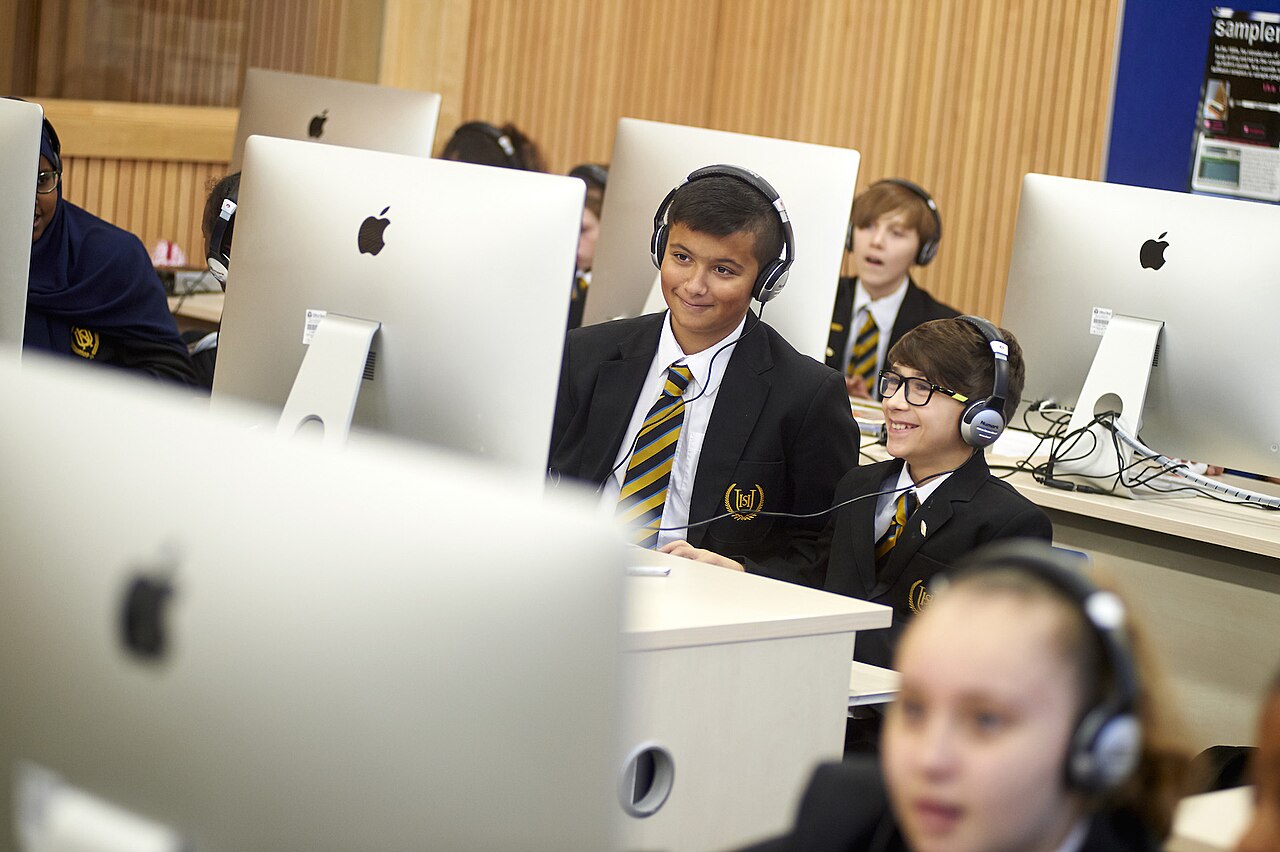 A room full of idle Macs. This is exactly the hardware Apple's Minions recruits as GPU workers. Photo: Right000 via Wikimedia Commons
3. It runs real models, locally, with no API calls
This is not a simulation or a roadmap slide. Minions already handles two kinds of GPU inference: embedding generation and LLM completions.
- It uses open-source transformer models from Hugging Face and Ollama.
- Ollama is installed and executed on each participating device, so inference happens locally with no remote API calls.
- Nothing phones home. Nothing waits on a vendor's rate limit.
The so what: this is the architecture every privacy-conscious company claims to want, and Apple already runs it internally.
(Source: Computerworld)
4. It killed a ten-hour queue
Here is the number that matters. Before Minions, some Apple teams faced inference job queues of over ten hours because centralized GPU capacity was limited.
- With Minions, tasks often begin execution within minutes, riding on idle macOS devices.
- That is not a 2x improvement. That is a workflow going from "tomorrow" to "right now."
- And the paper's own math says the unlocked capacity comes at effectively zero cost, using hardware that already exists.
The so what: most AI teams do not have a compute shortage. They have an inventory problem.
(Source: Computerworld)
5. People literally Slack each other for compute
My favorite detail in the whole paper: teams coordinate executor participation informally.
- Someone sends a Slack message asking colleagues to temporarily run the Minion Executor and target a specific project.
- Compute provisioning as a group-chat habit. No tickets, no procurement, no cloud console.
- Your infrastructure is a Slack thread, and honestly it works better than the ticket queue.
The so what: the future of devops might be less automation and more asking nicely in chat.
(Source: Computerworld)
6. The confidentiality objection got a real answer
The obvious pushback: do I really want company secrets processed on my coworker's Mac?
- Minions supports team- or organization-scoped deployments backed by dedicated PostgreSQL databases and isolated executor pools.
- Sensitive work gets a small, ring-fenced pool of Macs with real risk governance.
- The data never leaves the company, which compliance departments will absolutely love.
The so what: the privacy story here is stronger than most cloud offerings, because the data physically stays in the building.
(Source: Computerworld)
7. Training is next, and that is the bigger deal
Today Minions does inference only. But the Apple team plans to extend it to distributed model training.
- If that lands, enterprises could fine-tune and build models on the Mac fleet they already own.
- Combine it with RDMA-clustered Macs and you get something that looks suspiciously like a real training cluster.
- Say the uncomfortable part out loud: this would eat directly into cloud AI services revenue. Apple is quietly building the tech that makes your cloud GPU bill optional.
The so what: inference today is the demo. Training tomorrow is the disruption.
(Source: Computerworld)
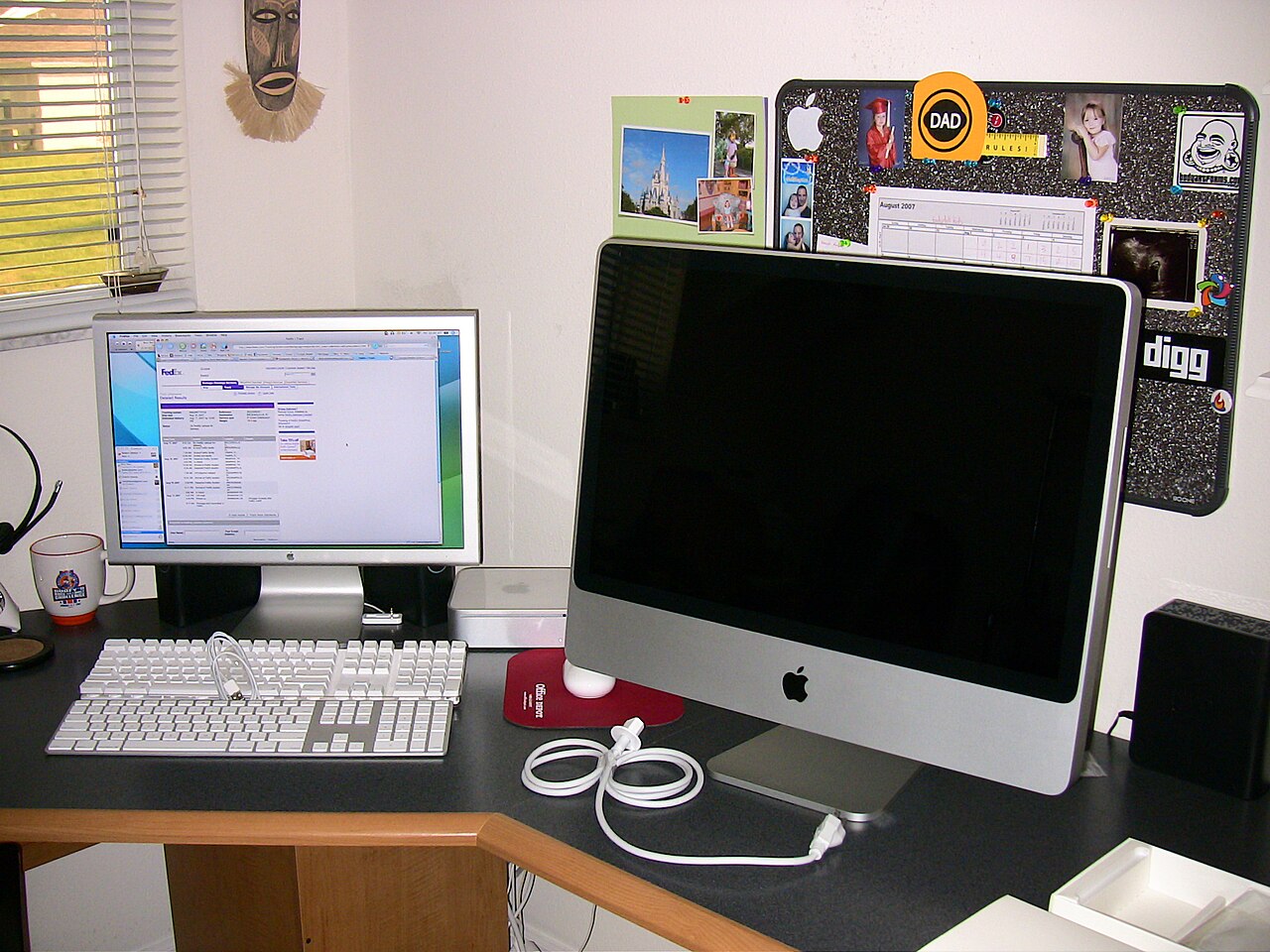 A 24-inch iMac. One potential node in a virtual GPU cloud, if Apple ever lets the rest of us play. Photo via Wikimedia Commons
8. Apple is not sharing it. Yet.
The one flaw in this outpouring of enthusiasm: Apple has announced no plans to make Minions available outside the company.
- But the researchers openly float the big idea in the paper itself.
- If idle macOS devices across organizations, or even the global community, could be securely federated, they could form a massive shared GPU resource pool.
- The paper gestures at roughly 100 million Macs. "Why build a data center" is now a serious question.
The so what: the most interesting sentence in the paper is a hypothetical, and the whole industry should be thinking about it.
(Source: Computerworld)
How to start
You cannot download Minions today, but you can steal the idea.
- Solo dev: install Ollama on your own Mac right now. That is the consumer version of this paper, and it works today.
- Team lead: pilot the concept with your team's Macs after hours, starting with batch embedding jobs, the easiest win.
- Infra nerd: look at the MLX framework and Thunderbolt-clustering experiments. The community is already building the poor man's version.
- 90-day plan: measure how many inference hours you currently buy from a cloud vendor, then estimate what percentage could run on hardware you already own. The number will annoy you.
The real pattern
The most expensive hardware in your company is the hardware that is already paid for and sitting idle. Minions is not a hardware breakthrough. It is an accounting breakthrough: Apple stopped treating idle machines as furniture and started treating them as inventory. Everyone else is still buying GPUs while theirs gather dust.
Final thoughts
Every company has a data center. Most of them just call it the office.
Apple wrote the paper. The rest of us get to copy the idea.
Yes, AI helped write this. It did the typing. I gave the ideas and I did the editing and orchestrating.
If this saved you money or taught you something, buy me a coffee. It keeps the articles coming.
Follow along. Clap if it earned it.