The 8 Things Microsoft's 2.8 Trillion Parameter Model Proves in 2026 (You Will Never Train One)
The biggest open-training claim of the year arrived this week. It also arrived with an asterisk the size of the model.
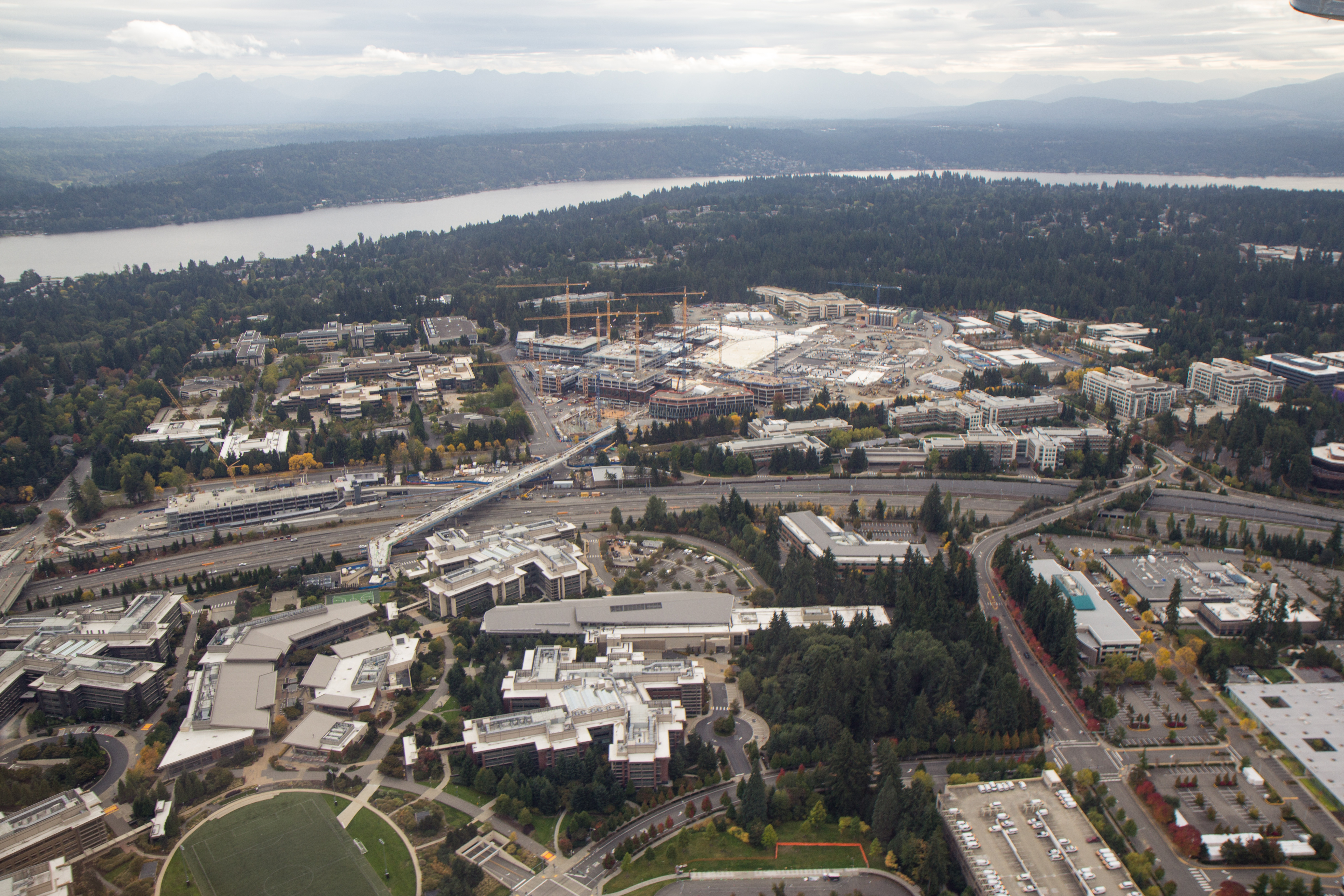 Microsoft's Redmond campus. Somewhere in here, a team just finished training the largest model recipe the company has ever published. Photo: Atomic Taco via Wikimedia Commons
Let's stop pretending the model race is about who can ship the biggest number.
On October 15, Microsoft AI announced it had finished pre-training MAI-Base-2: 2.8 trillion total parameters, with only 80 billion active for any given token. Bigger than anything it has done before. And the most interesting line in the whole announcement is the one they want you to skim past.
This article is not a model release note. It is about what a company tells you when it publishes the recipe but keeps the cake.
1. The numbers are genuinely ridiculous
Start with the raw facts, because they set the scale.
- 2.8 trillion total parameters, 80 billion active per token. A mixture-of-experts model, with experts in every layer.
- Trained on 16,000 Nvidia GB200 GPUs over 38 days in August and September 2026.
- Training mix: about 50 trillion tokens of what Microsoft calls "organic" data. Knowledge cutoff: March 2026.
Only about 3% of the model is awake at any moment. The rest is specialists on call, and the router decides who gets woken up.
(Source: aiPings, AlexTech.ai)
2. The claim is efficiency, not size
Microsoft is not bragging about being the biggest. It is bragging about being the most efficient at being big.
- On its own held-out evaluations, MAI-Base-2 outperformed every open-weight model it tested, including DeepSeek-V4-Pro-Base, the strongest open base model.
- The headline claim: its training recipe is 4.2 to 12.3 times more compute-efficient than DeepSeek-V4-Pro-Base at equivalent evaluation scores.
- That figure comes from Microsoft fitting scaling laws to results on four evaluations. These are Microsoft's own estimates, and they have not been replicated by third parties.
Efficiency is the real benchmark of the AI industry now. Size is just what efficiency buys you.
(Source: aiPings, AlexTech.ai)
3. It can see, and it learned to see properly
This is the detail that actually changes what the model is for.
- Unlike its predecessor, MAI-Base-2 trained on vision from the start. No separate image encoder bolted on afterward.
- About 18% of the 50 trillion token mix was vision-language data together: charts, captions, spatial reasoning, medical images.
- Microsoft says it reads scientific charts natively, as part of pre-training, not as a post-training trick.
Most multimodal models are text models with a translator stapled on. This one grew up bilingual. That distinction will matter for every lab instrument and spreadsheet on earth.
 Satya Nadella. Microsoft AI's frontier pre-training team just made the case that its own recipe now leads the open-model field. Photo: Brian Smale and Microsoft via Wikimedia Commons
4. The "organic data" line is doing heavy lifting
Read Microsoft's data claim slowly, because it is aimed squarely at a courtroom.
- The company says its training data is "organic" and that it did not learn from other companies' models. No distillation.
- This matters because distillation (training your model on another model's outputs) is exactly the practice at the center of this year's training-data lawsuits.
- With lawsuits flying at OpenAI over training data, Microsoft is pre-announcing its clean hands: our data is ours, our chain of custody is documented.
The so what: every serious lab now publishes its data provenance like it is evidence. Because it is.
(Source: VandaTeam, Golden Era)
5. The engineering is the interesting part
The model card is a shopping list of tricks worth stealing.
- Microsoft replaced every old FFN layer with MoE layers, and raised MoE-layer compute utilization from 24% to 35%. Expert layers throughout the network.
- It used Muon, the popular open-source optimizer, to speed up the training workflow.
- Reported training stats: 21% average model FLOPs utilization, 89% goodput, the share of time training was actually progressing.
Ninety thousand GPUs of peak compute, and the honest number is that a fifth of it did useful work. That is the industry average nobody puts in a press release, and Microsoft put it in a blog post.
6. You cannot have it
Here is the part that reframes everything above.
- MAI-Base-2 is a base model, not a product. It predicts text. It has not yet been taught to follow instructions, reason step by step, or chat safely.
- It is currently in post-training, the stage where the reasoning and guardrails get added. No release date.
- When the weights do come out, they go to "trusted partners" through Azure AI Foundry. No price, no partner list, no dates.
The so what: the open-weights community gets the recipe details, the graphs, and the press release. The weights stay in Redmond's kitchen.
(Source: SiliconANGLE, D-CSIL)
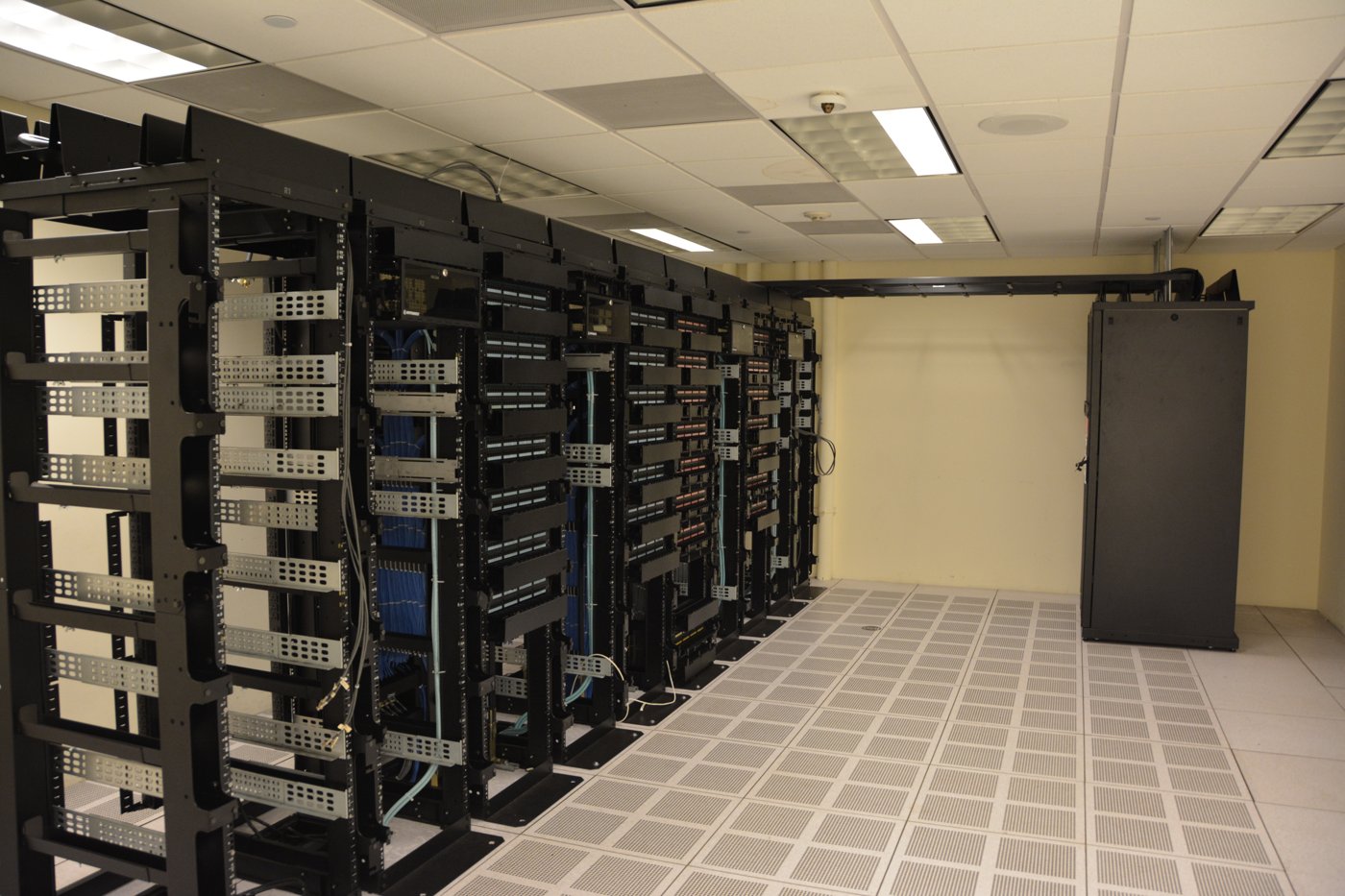 The kind of hardware that trained MAI-Base-2: thousands of GPUs running for 38 days straight. Photo: Carl Lender via Wikimedia Commons
7. MAI-Base-3 is already cooking
The announcement ends with the sentence that makes everything above look like a warm-up.
- Microsoft says work on MAI-Base-3 has already started. The treadmill has no off switch.
- Meanwhile, DeepSeek is reportedly training a 2T model and eyeing an 8T successor, per industry reporting.
- The window between "we finished pre-training" and "we started the next one" is now measured in days, not quarters.
The so what: model releases are no longer events. They are conveyor belts.
(Source: AlexTech.ai, VandaTeam)
8. The honest read of the whole announcement
Let's be blunt about what this week actually was.
- Microsoft proved it can train bigger and cheaper than the open field. The efficiency numbers are the real product here, and they are Microsoft's own.
- It published enough engineering detail to be useful, and kept everything that matters (the weights, the exact data mix, the price of access) behind a partner program.
- The "organic data" framing is as much a legal strategy as a technical one, and in 2026 that is just good sense.
My take: this is the new normal for frontier labs. Show the math, hide the weights, document the provenance.
How to start (as a dev)
- Curious: read the "Frontier Pre-training at Microsoft AI" Lab Notes post (Oct 15). The FLOPs utilization and goodput numbers are the most honest part of it.
- Builder: study Muon and the move to all-MoE layers. The optimizer and architecture choices are public knowledge; the weights are not.
- Founder: do not build on top of MAI-Base-2 yet. It is in post-training with no access date. Watch the Azure AI Foundry partner program for the actual release.
- Everyone: the DeepSeek-V4-Pro-Base comparison is worth understanding, because it is now the yardstick every big lab measures itself against.
The real pattern
The model race stopped being about parameters a while ago. It is now a race in efficiency: who can turn a watt and a token into more intelligence than anyone else. Microsoft's announcement is a claim to be leading that race, measured on its own stopwatch. The uncomfortable part is that the stopwatch belongs to the runner.
Final thoughts
2.8 trillion parameters, 80 billion awake at a time, trained for 38 days on enough silicon to power a small country.
And the model you will actually get to use is still in the oven.
That is frontier AI in 2026: the future arrives as a blog post, and the product arrives whenever the lawyers and the partner program agree.
Yes, AI helped write this. It did the typing. I gave the ideas and I did the editing and orchestrating.
If this saved you money or taught you something, buy me a coffee. It keeps the articles coming.
Follow along. Clap if it earned it.