The 9 Numbers That Show OpenAI's Invisible Watermark Fails 83% of the Time in 2026 (It Can't Catch an Editor)
OpenAI sat on watermarking tech for two years because it knew users would hate it. Europe just made them ship it anyway.

OpenAI's textGrain adds a hidden statistical signal to ChatGPT and Codex text for EU users. Photo: Interesting Engineering.
Let's stop pretending this is about catching cheaters. OpenAI's new invisible watermark catches the lazy, and even OpenAI admits a decent editor walks right through it.
Here's the uncomfortable truth: the watermark fails 83% of the time once someone rewrites a quarter of the words. Which is, you know, what editing is.
This article is not a panicked guide to beating the system. It is about why the system was never going to work, and what OpenAI was actually afraid of for two years.
1. Swap 25% of the words and the watermark is gone
- OpenAI's own tests: 200-token psychology passages were detected ~80% of the time, 400-token passages ~95%.
- Replace 10% of words with synonyms and detection drops from ~92% to ~66%.
- Replace 25% and it collapses to ~17%. Translation and heavy rewriting kill it too.
- Math and code are nearly hopeless: fewer word choices mean less room to hide the signal.
The so what: anyone who actually edits their writing is invisible to this thing. (Source: TechCrunch)
2. OpenAI built this in 2024 and sat on it
- OpenAI had a working text watermark back in 2024. It chose not to ship it.
- The reported reason: fear that users would switch to competitors without watermarked text.
- So the technology existed while AI detectors were publicly failing students and writers. OpenAI just waited.
- Meanwhile its own AI text classifier was retired in July 2023 for being too inaccurate.
The so what: OpenAI knew exactly how unpopular this would be.
OpenAI had the technology in 2024 and shipped it in 2026 because Europe made it mandatory. (Source: Interesting Engineering)
3. Anthropic shipped first, and its users revolted
- Two months ago, Anthropic rolled out worldwide watermarking on Claude text. No EU loophole, everyone got it.
- Some Claude users pushed back hard. Their argument: they provide the instructions, the context, the decisions. The AI is a tool, not the author.
- That backlash is exactly what OpenAI spent two years avoiding.
- (It is genuinely funny that the "safety-first" company shipped the unpopular thing and the "move fast" company waited for a law to make them do it.)
The so what: the users never wanted this. Nobody asked. (Source: Interesting Engineering)
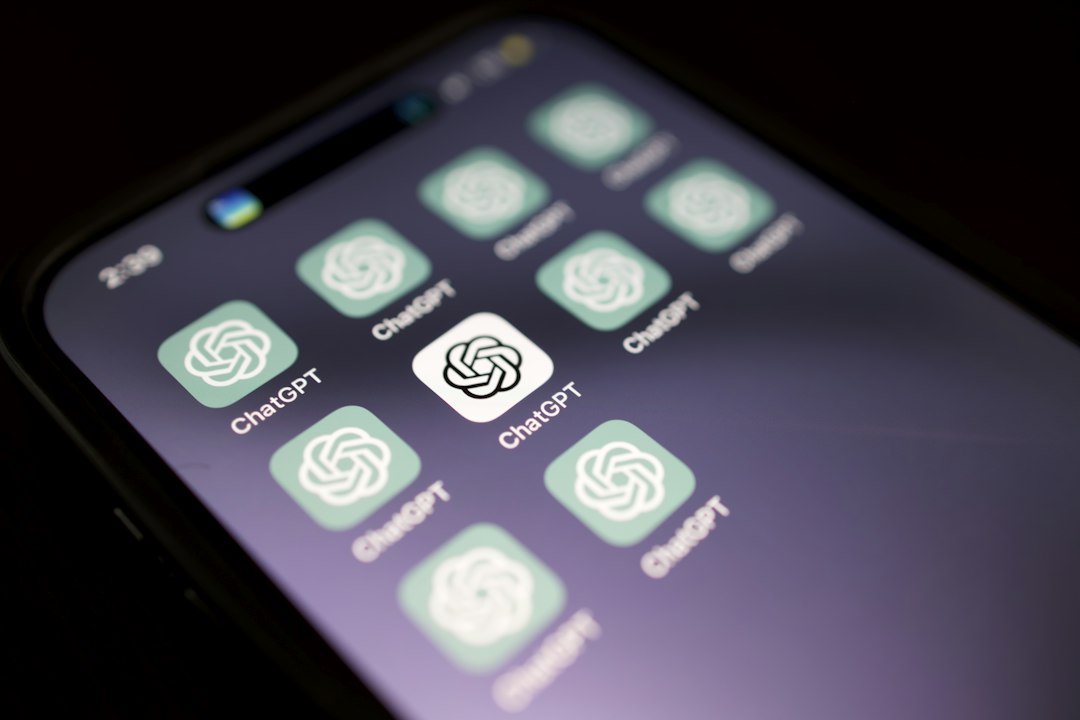
The watermark rolls out to eligible ChatGPT users on all EU plans over the coming weeks. Photo: Unsplash.
4. Google was already doing this in 2024
- Google's SynthID has been watermarking Gemini text since 2024, described in a Nature paper.
- China's labeling rules for AI content took effect September 2025: visible and embedded labels, mandatory.
- The EU's Article 50 transparency obligations kicked in August 2, 2026, with a transition window running to December 2, 2026.
- Anthropic, Google, Meta, Microsoft, and OpenAI have all signed the EU's code of practice for AI-generated content.
The so what: OpenAI's announcement is a compliance filing with a blog post. (Source: RightBlogger)
5. A positive detection proves almost nothing
Per OpenAI's own announcement on October 5, 2026:
- It cannot identify the user, account, or conversation behind the text.
- It says nothing about accuracy, ownership, or responsibility.
- It cannot tell you how much human work went into the final text.
- And a missing watermark does not prove a human wrote it (short text, edits, translation, other models all slip through).
The so what: this is provenance theater, not proof of authorship. (Source: OpenAI developer community)
6. The false positive problem is still unsolved
- OpenAI admits its detector can generate false positives and miss genuine watermarks.
- Detector access is limited to approved researchers and expert organizations at first, partly to avoid false accusations and stop spammers from probing it for evasion tricks.
- A human's genuinely original writing can still get flagged. The company just hopes researchers figure out the error rate before it is used against you.
- The watermark is statistical, not cryptographic. It estimates; it does not prove.
The so what: the detector is a research project wearing a product's clothes. (Source: WriteHuman)
7. It is EU-only because Brussels made it mandatory
- The watermark rolls out to eligible ChatGPT and Codex users across all EU plans over the coming weeks.
- API customers worldwide can opt in for select models. Default: off.
- OpenAI explicitly says it is not making watermarking a global default at launch.
- Nobody at OpenAI woke up believing in watermarking. Article 50 of the EU AI Act did that for them.
The so what: this is a regulation-shaped product. (Source: TechCrunch)

textGrain works by nudging the model's word choices with a secret key, leaving a statistical pattern readers can't see. Photo: Alexandre Debieve / Unsplash.
8. What this means for writers, students, and devs
- If you draft with ChatGPT in the EU, your raw output now carries a statistical fingerprint you cannot see.
- If you edit your own work like a professional, the fingerprint mostly vanishes. Editing remains the best privacy tool ever invented.
- If you are a student, know this: the detector is not public, so your university cannot run it. Anyone selling you a "textGrain detector" is selling snake oil.
- If you are a dev on the API, watermarking is opt-in and off by default. Your call.
The so what: the honest workflow (draft with AI, edit like a human) is also the undetectable one. (Source: TechCrunch)
9. The open-source move is the smartest part
- OpenAI plans to open-source textGrain and keeps studying how editing and translation affect the signal.
- A technical report is out, co-written with University of Pennsylvania and Yale researchers, walking through how a secret key sorts next-word predictions.
- Open-sourcing a detection method is counterintuitive: attackers can study it. But secrecy was producing exactly the false-accusation mess OpenAI wants to avoid.
- OpenAI also says watermarking caused no meaningful change in model performance with it switched on.
The so what: transparency about the limitations is the only trustworthy move here. (Source: WriteHuman)
How to start (pick your lane)
- Writer: assume anything you paste raw from ChatGPT is fingerprintable in the EU. Rewrite it in your voice and it stops being anyone's problem.
- Teacher or editor: do not buy detection tools claiming textGrain support. The detector is not public. Grade the work, not the provenance.
- Dev: if you ship API features in the EU, watermarking is opt-in per model. Test what it does to your outputs before turning it on.
The real pattern
Every detection technology eventually becomes a tax on the honest and a minor inconvenience for the cheaters. OpenAI's own numbers prove the cheaters were never the target audience. The regulators were.
Final thoughts
A watermark that dies when you edit is not a lie detector. It is a mirror: it only works on people who never touch their own words. Edit like you mean it, and the signal fades into the most human thing of all, your own voice.
Yes, AI helped write this. It did the typing. I gave the ideas and I did the editing and orchestrating.
If this saved you money or taught you something, buy me a coffee. It keeps the articles coming.
Follow along. Clap if it earned it.